

Honouring the legacy of Bomber Command veterans
Published:
Categories:
In Memory, Volunteering, Fundraising, Bomber Command Memorial news, RAF Family,
As we commemorate the unveiling of the Bomber Command Memorial on 28 June, we reflect not only on the courage and sacrifice of those who served, but also on the individuals who worked tirelessly to ensure their legacy would never be forgotten.
One such person is Cherry Greveson, whose dedication to the Sussex Bomber Command Aircrew Veterans Group helped raise vital funds for the RAF Benevolent Fund, support veterans in later life, and secure lasting recognition for their comrades who did not return.
How did your journey with the Sussex Bomber Command Aircrew Veterans Group begin, and what did your role involve?
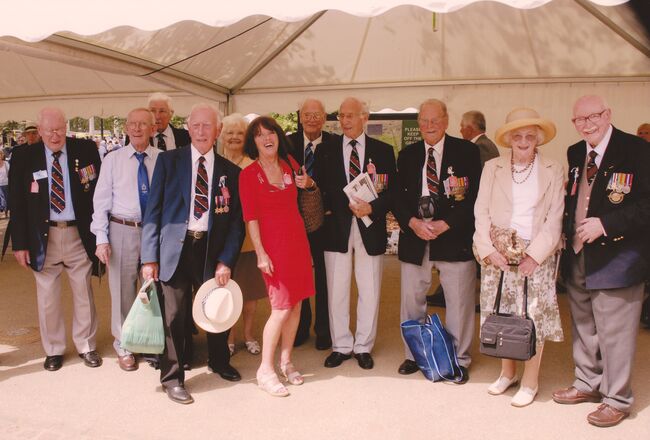
My involvement began in 2009, when my husband, a civilian airline pilot, and I were invited to a local Aircrew Association meeting where I met the veterans. They were already in their mid-to-late 80s and early 90s, and they asked me to help them, having been encouraged by my interest in military aviation history.
Over time, my role became quite wide-ranging. I acted as the group’s PR lead, organiser, driver, and companion/carer. I organised events, managed fundraising, and helped promote their work, but I also felt a strong responsibility to protect them. The veterans affectionately dubbed me ‘mother hen’, which I always took as a great compliment.
What fundraising initiatives have you been involved with?
Our primary aim was to honour the men of Bomber Command particularly those who did not return. These veterans had lost friends and crew mates; this was deeply personal to them. Much of our fundraising focused on supporting the construction and ongoing maintenance of the Bomber Command Memorial in Green Park, London – now a lasting national tribute following its unveiling on 28 June 2012.
Our connection with the RAF Benevolent Fund began when it took on responsibility for the Bomber Command Memorial. After the required funds for its upkeep had been raised, we were proud to continue supporting the RAF Benevolent Fund’s wider work. We also supported organisations such as the International Bomber Command Centre in Lincoln and the Canadian Warplane Museum.
Over the years, our fundraising efforts have reached over £100,000. One especially memorable contribution was a £5,000 donation from veteran John “Jo” Lancaster, who sold his gold Rolex watch to support our efforts. The watch was gifted to him by Martin-Baker (famous for designing aircraft ejection seats) after he became the first person to eject from an aircraft in a real emergency in 1949!
What moments stand out most from your time with the veterans?
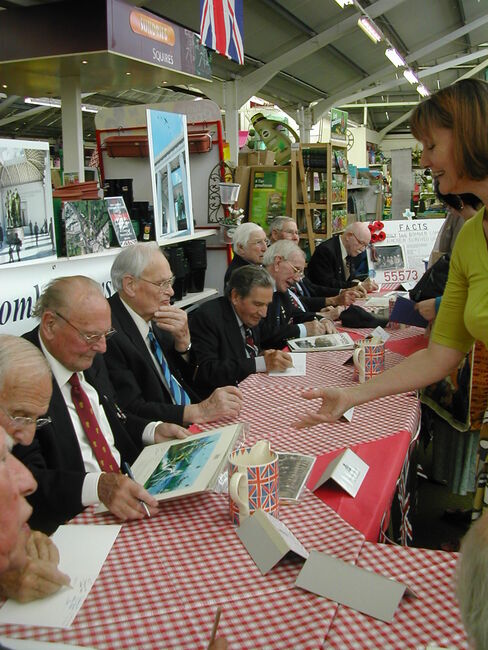
There are so many extraordinary memories - it’s difficult to choose! Simply being in their company was a privilege. But there were some truly special moments, including trips abroad to former wartime targets such as Peenemünde, Berlin, and the V-weapon sites in France.
We developed a close and enduring friendship with the Battle of Britain Memorial Flight (BBMF) and one of the most moving experiences was flying with veterans in the BBMF Dakota over their wartime airfields. We also attended two garden parties at Buckingham Palace and visited 10 Downing Street.
Perhaps most meaningful, though, were the opportunities to reconnect with the families of former crew members, both in the UK and overseas. Alongside all of this were countless smaller moments of friendship, humour, and camaraderie, that meant just as much.
What does supporting the RAF Benevolent Fund mean to you?
The RAF Benevolent Fund plays a vital role in ensuring that the RAF family, past and present, is supported and remembered. For us, it was a natural continuation of the veterans’ wishes. Once the Memorial was secured, continuing to raise funds for the RAF Benevolent Fund meant their efforts could go on helping others.
What is the group’s legacy today?
The group officially came to a close following the passing of its final member, George Dunn DFC Ld’H, who died on 28 April 2026 at the remarkable age of 103. Given that all members were born between 1917 and 1924, it is incredible that the group remained active for so long.
We firmly believed that staying engaged, having a shared purpose, and enjoying the camaraderie of the group played a significant role in prolonging their lives. Many were widowers living alone, and the group offered both companionship and meaning in later life.
Above all, I would emphasise that the real accolades belong to the veterans themselves. What they achieved – not only during the war but in the decades that followed – is extraordinary. I feel incredibly fortunate to have helped them achieve their aims. It was a true privilege to be part of their story.